Books by Dave Whitaker

Check out Toolbox Training books and more at WritbyWhit.com or David L. Whitaker's author page at Amazon.com.

Showing posts with label language. Show all posts

Wednesday, November 29, 2017

Workshop: Understanding Child and Youth Development

As a result of this workshop, participants will:


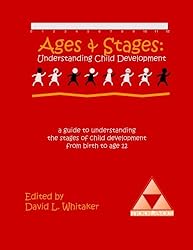
Toolbox Training highly recommends the Ages & Stages: Understanding Child Development book as a complement to this workshop. Click here for information on that and other books from Toolbox Training.

Check out this video of the Power Point presentation from this workshop for an idea of what you can expect:


To have this delivered as an on-site workshop contact Toolbox Training.

Check out the workshops tab for a full list of titles.


Monday, November 27, 2017

The 5 Domains of Child and Youth Development

When discussing child and youth development, there are five basic domains. Each is explained briefly below. You can click on the domain to go to a page with more information, including links to activities to support that development.

Physical – how we move

“The process of gaining control of our large and small muscles as well as the use of the senses.”


Cognitive – how we think

“It is not the same as intelligence. It is “the construction of thought processes, including remembering, problem solving, and decision-making, from childhood through adolescence to adulthood.” – Gale Encyclopedia of Children’s Health


Communication and Language – how we interact

Communication is “the expression of ideas, thoughts, and feelings to others.”

Language is a system of words and the rules for their use in speaking, listening, reading and writing. – adapted from Caring for Children in School-Age Programs


Social and Emotional – how we feel

“The capacity to recognize and manage emotions, solve problems effectively, and establish positive relationships with others.” – Joseph E. Zins and Maurice J. Elias, “Social and Emotional Learning”


Self – who we are

“Understanding who you are [and] how you identify yourself in terms of culture, environment, physical attributes, preferences, skills, and experiences.” – from Caring for Children in School-Age Programs II


Above information from Francis Institute for Child and Youth Development (2014). Professionall Development for Afterschool/Youth Workers (a series of 24 modules). Metropolitan Community College; Kansas City, MO.

Toolbox Training Resources:


Saturday, November 11, 2017

The 5 Age Groups of Child and Youth Development

When discussing child and youth development, there are five different age groups to consider:

Infants – This covers ages 0 months to 12 months old.


Toddlers – This covers from 12 months to 3 years old.


Preschoolers – This covers from 3 years to 5 years old.


Schoolagers – This covers from 5 years to 12 years old.


Adolescents – This covers from 13 years old to 17 years old.


Related:


Saturday, September 6, 2014

September 6: Read a Book Day

image from 3.bp.blogspot.com

Toolbox Training hopes to roll out a language activity card set/book by year’s end. Along with activities around reading, the set should include activities for storytelling, writing, poetry, bookmaking, and more.


Various Reading Activities

Here are different reading activities to consider:

  • Read a book to the group.
  • Have older kids read to younger kids.
  • Have non-readers look at a picture book and tell an adult what they think the story is about without knowing the words.
  • Read a picture book to the group without showing the pictures. Then ask the kids to illustrate the book.
  • Read part of a book to the group and then have them predict the ending. Then finish to see how close kids were.
  • Have kids act out a book as an adult or older child reads it.
  • Let kids read books and record their voices for books on tape.

Check out the full September calendar to see the month at a glance as well as floating holidays, specialty weeks, and themes for the month.