Books by Dave Whitaker

Check out Toolbox Training books and more at WritbyWhit.com or David L. Whitaker's author page at Amazon.com.

Showing posts with label February holidays. Show all posts

Sunday, February 19, 2017

February 19: Phonograph patented (1878)

image from galleryhip.com


The Technology of Music

Possible Materials:

  • phonograph player and 78s
  • record player and records
  • reel-to-reel player and reel-to-reel
  • eight-track player and eight tracks
  • cassette player and cassettes
  • CD player and CDs
  • iPod
  • mobile phone with Spotify, YouTube

Directions:

  1. The above materials are merely suggestions. You aren’t likely to be able to access all of these!
  2. Put out requests to your families to see if you can borrow players which you don’t already have.
  3. If you can’t get the actual technology, find photos of each on the Internet and print them out.
  4. Let kids experiment with the various methods of playing music which have existed over the years.
  5. When they don’t have access to the actual players, discuss the photos and how the devices must have worked.
Check out 100 Music Activities for Kids for more music activities for kids.


Check out the full February calendar. It includes floating holidays, specialty weeks, and specialty months.

Thursday, February 16, 2017

February 16: World Championship Crab Races

image from pinterest.com


Crabs and Crawdads

Materials:

  • none

Directions:

  1. Playing field must be divided into two equal halves.
  2. Players group in two equal teams, one on each side of center line.
  3. One side is the crabs team and the other the crawdads.
  4. Caller yells out either “crabs” or “crawdads.”
  5. If caller yells “crabs” then the crabs must run from center line back to their base without being tagged by the crawdads. If caller yells “crawdads” then the crabs chase the crawdads.
  6. Any player tagged joins the other side.
  7. Game ends when all players are on one side.

Variations:

  • Caller should stretch out word as much as possible and occasionally bluff by yelling other words starting with ‘cr’ (crackers, crumb, etc.)
  • This game can be done along with ‘Rock, Paper, Scissors’. Team decides on one of the three and then everyone regroups at center line. At count of three, everyone offers up the appropriate sign for their team and winning side chases other side.
  • Create 3 or 4 teams.

Source(s): 100 Game Activities for Kids (activity A5)


Check out the full February calendar. It includes floating holidays, specialty weeks, and specialty months.

Wednesday, February 15, 2017

February 15: Jewelry Day

image from jewellerykorner.blogspot.com

The Toolbox Training book 100 Art Activities for Kids has an entire section on jewelry, including yarn bracelets, paper clip jewelry, macaroni jewelry, lima bean jewelry, key chain, clay beads, and edible necklace. Consider setting up various jewelry-making stations for the kids. Here’s the instructions for one of the activities:


Lima Bean Jewelry

Materials:

  • lima beans in pods
  • large darning needle
  • heavy thread

Directions:

  1. Consider soaking beans in water and food coloring to create different colors.
  2. Thread the needle to desired length.
  3. Tie a knot in one end.
  4. Push the lima beans onto the thread one at a time.
  5. Add a pod to the thread every now and then.
  6. Tie the ends of the thread together to finish the necklace.

Source(s): 100 Drama Activities for Kids (activity J4)


Check out the full February calendar. It includes floating holidays, specialty weeks, and specialty months.

Monday, February 13, 2017

February 13: Get a Different Name Day

image from housing.iastate.edu

This game is typically used to help children get to know each other’s names. To adapt this for “Get a Different Name Day,” let kids pick new names and play the rest of the game according to the directions. You could also let kids create name tags for their new names and go by their new names for the rest of the day.


The Name Game

Materials:

  • none

Directions:

  1. This isn’t a strict pantomime activity; participants can speak, but only to say their names.
  2. The idea of the game is to help kids learn each other’s names. This game is ideal for a group of kids that are just meeting each other.
  3. A child says his/her name and simultaneously offers some kind of gesture or movement.
  4. Everyone in the group can then repeat the child’s name and gesture/movement.
  5. After everyone has a turn, then this can become a memory game that can be played several different ways. First, one child (or an adult) can be the caller. The caller would either say a name or do a gesture/movement and the rest of the group would repeat it and point to that person.
  6. The game could also be played as such: Players stand in a circle. The first player says someone’s name and/or does the gesture/movement. The next player must go stand where that person is. If the player was right, then the player now does a name/gesture for the person s/he is replacing. If not, then the first player gets another turn, this time for the next person in the circle.

Source(s): 100 Drama Activities for Kids (activity G5)


Check out the full February calendar. It includes floating holidays, specialty weeks, and specialty months.

Saturday, February 11, 2017

February 11: Inventor's Day/Thomas Edison's Birthday (1847)

image from calif-tech.com


Invention Convention

Materials:

  • Unlimited supply of recycled items
  • Variety of materials for attaching items (string, staples, glue, tape, etc.)
  • Paper
  • Pencil

Directions:

  1. The materials listed above are only a starting point. The adults and kids can be creative in coming up with plenty more materials to inspire inventions.
  2. Allow kids to work alone or in groups.
  3. Encourage children to look over materials and develop an idea first of what they wish to create. They can even draw out a diagram of what they want their finished product to look like.
  4. Once designed, then kids can start building.
  5. When products are complete, display the kids’ work by putting on an Invention Convention. Think of this as similar to a science fair.

Source(s): 100 Nature Activities for Kids (activity K2)


Check out the full February calendar. It includes floating holidays, specialty weeks, and specialty months.

Friday, February 10, 2017

February 10: Crime Prevention Week (2nd week of February)

image from police.ucdavis.edu


Detective Prop Box

Materials:

  • uniforms, suits or ties
  • note pads
  • badges
  • magnifying glass
  • hand-held tape recorder
  • ink pad for finger prints
  • briefcase
  • file folders
  • typewriter
  • cases to solve

Directions:

  1. Prop boxes are items grouped together by a theme to allow children to pretend. They can be used as specific activities or put out during free time.
  2. The materials listed above are merely suggestions. You may come up with additional ideas and leave some of these materials out.
  3. The boxes that hold 10 reams of computer paper/typing paper are a nice size for prop boxes. They can be covered with nice contact paper to make them more attractive.
  4. You might also consider a creative way of putting all the prop box materials into something that fits the theme. For example, a camping prop box might go in a backpack; a travel prop box could go in a suitcase.

Source(s): 100 Drama Activities for Kids (activity A5)


Check out the full February calendar. It includes floating holidays, specialty weeks, and specialty months.

Thursday, February 9, 2017

February 9: Volleyball invented (1895)

image from ihmmumbaisports.blogspot.com


Circle Volleyball

Materials:

  • balloon

Directions:

  1. Kids sit in a circle and take turns batting a balloon to keep it up in the air.
  2. Let the group keep track of how many times they hit it in the air before it touches the ground.
  3. You might also see how many kids can hit the balloon before it touches the ground.

Variations:

  • Add more balloons.
  • Scoot chairs out farther.

Source(s): 100 Game Activities for Kids (activity C15)


Check out the full February calendar. It includes floating holidays, specialty weeks, and specialty months.

Wednesday, February 8, 2017

February 8: Boy Scout Day (founded 1910)

image from calendarholidays.xyz

Celebrate this big day with some camping activities!


Camping

Bring in various props to allow the kids to pretend they are camping. Consider:

  • Tents
  • Sleeping bags
  • A homemade campfire (with paper towel tubes as logs and tissue paper for flames)
  • A backpack packed with camping necessities
Possible activities include:
  • Mapping and orienteering with maps and compasses
  • Tape recording nature sounds
  • Fishing with magnets on sticks to pick up “fish” made out of paper and paper clips
  • Making first aid kits

Source(s): 100 Nature Activities for Kids


Check out the full February calendar. It includes floating holidays, specialty weeks, and specialty months.

Tuesday, February 7, 2017

February 7: Run for Your Life Day

image from flickr.com

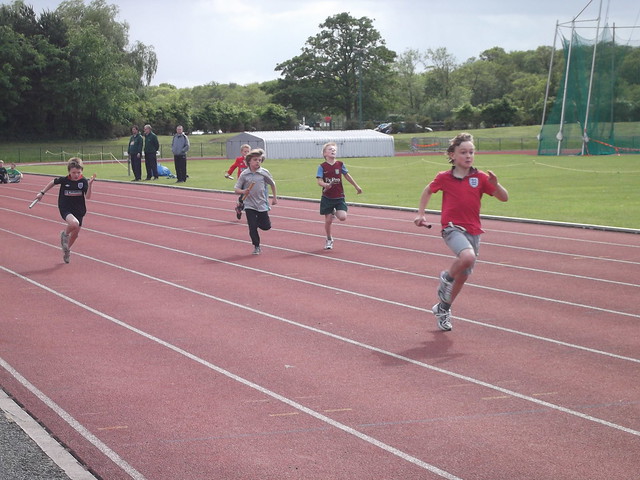
A section in the Toolbox Training book 100 Game Activities for Kids focuses on relays. Below are the directions for more traditional relays.


Tradtional Relays

Materials:

  • depends on relay

Directions:

  1. Divide kids into at least two teams with four to eight kids per team ideally.
  2. Determine if children go only once or more than once.
  3. You may wish to have a stopwatch on hand.
  4. Pick an action (hop, run, skip, run backwards, crab walk, jump, crawl, etc.).
  5. Each child must get to designated area and back doing that action.

Variations:

  • Vary how many teams there are.
  • Vary how many players are on each team.
  • Change the distance children have to run or skip, etc.
  • Have each child in the relay perform a different action. Example: the first one has to hop, the second one has to run backwards, etc.
  • With small groups (4 or under), you could have each child go multiple times and they have to perform a different action each time.

Source(s): 100 Game Activities for Kids (activity D1)


Check out the full February calendar. It includes floating holidays, specialty weeks, and specialty months.
Sunday, February 5, 2017

February 5: Weatherperson's Day

image from abclocal.go.com

The Toolbox Training book 100 Nature Activities for Kids has an entire section of weather activities which includes activities such as making a weather vane, rain gauge, barometer, and hygrometer. Consider making those various instruments along with starting a weather calendar today and keeping it for the next month.


Weather Calendar

Materials:

  • 2 large calendars or poster board to make calendars
  • construction paper
  • ruler
  • pencil
  • glue
  • scissors
  • markers

Directions:

  1. Discuss weather conditions with the children. What’s the weather going to be like today? How can we find out?
  2. The children will cut out symbols from construction paper that describe the weather (such as an umbrella for a rainy day, sun for a sunny day, or cloud for a cloudy day).
  3. The children can also write the days of the week and the dates on the calendar.
  4. The children may want to call the weather line to get a prediction for the day.
  5. The children can attach the symbol for the day and write in the temperature.

Source(s): 100 Nature Activities for Kids (activity A3)


Check out the full February calendar. It includes floating holidays, specialty weeks, and specialty months.

Saturday, February 4, 2017

February 4: Thank a Mailman Day

image from domaingang.com


Post Office Prop Box

Materials:

  • paper
  • writing instruments (pencils, pens, markers, etc.)
  • envelopes
  • stamps
  • junk mail
  • old greeting cards
  • large mailing envelopes
  • postman clothes
  • mail bag
  • scale
  • mail box (kids could make)

Directions:

  1. Prop boxes are items grouped together by a theme to allow children to pretend. They can be used as specific activities or put out during free time.
  2. The materials listed above are merely suggestions. You may come up with additional ideas and leave some of these materials out.
  3. The boxes that hold 10 reams of computer paper/typing paper are a nice size for prop boxes. They can be covered with nice contact paper to make them more attractive.
  4. You might also consider a creative way of putting all the prop box materials into something that fits the theme. For example, a camping prop box might go in a backpack; a travel prop box could go in a suitcase.

Source(s): 100 Drama Activities for Kids (activity A18)


Check out the full February calendar. It includes floating holidays, specialty weeks, and specialty months.

Friday, February 3, 2017

February 3: Children’s Dental Health Month

image from bwilbys.blogspot.com


Keeping Eggs’ Teeth Healthy

Materials:

  • Fluoride rinse solution (available from a dentist and sold at some pharmacies)
  • Eggs
  • White vinegar
  • 3 containers

Directions:

  1. Pour four inches of fluoride into a container and place an egg in it.
  2. Let it sit five minutes and then remove the egg.
  3. Pour four inches of vinegar in each of two other containers.
  4. Place the fluoride-treated egg in one container and a non-treated egg in the other.
  5. What happens to the two different eggs?
  6. Why do you think dentists recommend brushing teeth with fluoride toothpaste?
Source(s): kidshealth.org, adapted for the Toolbox Training book 100 Science Activities for Kids (activity E12).


Check out the full February calendar. It includes floating holidays, specialty weeks, and specialty months.

Wednesday, February 1, 2017

February 1: Hobby Month

image from merelymarie.com


Hobby Fair

Materials:

  • tri-fold boards
  • posterboard
  • scissors
  • glue
  • tape
  • markers
  • crayons
  • construction paper
  • materials needed by individual children

Directions:

  1. Consider having a “Hobby Fair” similar to Science Fairs where children have boards to showcase their hobbies instead of science projects.
  2. Let each child choose a hobby he/she wishes to showcase.
  3. If budget, time, and space allow, let children use the large tri-fold boards used in science fairs. If that isn’t feasible, let children make posters.
  4. Have a “Hobby Night” where families can be invited to see what the children chose to showcase.
  5. You could also make a small-scale version of this by putting up a bulletin board with photos of children involved in their hobbies.

Check out the full February calendar. It includes floating holidays, specialty weeks, and specialty months.

Sunday, February 28, 2016

February 28: Floral Design Day

image from paperflowerstudio.com


Paper Flowers

Materials:

  • construction paper
  • straws
  • stapler
  • glue
  • scissors
  • can or cups

Directions:

  1. Cut 8” squares of construction paper and fold like a fan.
  2. Fold fan in half to form flower and staple to straw.
  3. Cut leaves for each flower and glue or staple onto the straw.
  4. Flowers can be arranged in a cup or can to form an arrangement.
Source(s): Toolbox Training’s 100 Art Activities for Kids (activity B6).

Note: this book also has directions for making a flower basket out of paper.
Check out the full February calendar. It includes floating holidays, specialty weeks, and specialty months.

Friday, February 26, 2016

February 26: Tell a Fairy Tale Day

image from kidzcoolit.com


One-Minute Fairy Tales

Materials:

  • props as deemed necessary

Directions:

  1. This is a great activity for teaching kids how to whittle a story down to its basics.
  2. Choose a familiar fairy tale or other story that all the kids will know. If necessary, read the story to them first.
  3. Then ask for volunteers to act out the story. The catch is that they only have one minute.
  4. Then ask those same kids to act it out in 30 seconds.
  5. Then cut the time down to 10 seconds.
  6. Encourage kids to discuss what happens and what they learn about the story.

Source(s): 100 Drama Activities for Kids (activity I7)


Check out the full February calendar. It includes floating holidays, specialty weeks, and specialty months.

Thursday, February 25, 2016

February 25: Don't Utter a Word Day (Quiet Day)

image from reviewtrackers.com


Mum Ball

Materials:

  • a ball

Directions:

  1. This is a great game for transition times, quiet times, or circle time.
  2. Players sit in a circle.
  3. Players roll a ball back and forth without making any noise.
  4. If someone makes noise, (s)he is out.
  5. Play continues until only one player remains.

Variations:

  • For variety, kids who are out can walk around the back of the circle and try to get other players to make noise (no contact or noise allowed from those children who are out).
  • Also consider requiring the ball to remain in the circle or roller or receiver is out (your choice).
  • For a more active game, players can stand and ball can be thrown.

Source(s): 100 Game Activities for Kids (activity G1)


Check out the full February calendar. It includes floating holidays, specialty weeks, and specialty months.

Wednesday, February 24, 2016

February 24: Tortilla Chip Day

February 24: Tortilla Chip Day


Nacho Cheese Dip

Materials/Ingredients:

  • Cream cheese, 1 8-ounce package
  • Sour cream, 1 16-ounce package
  • Taco mix seasoning, 1 envelope
  • Bowl
  • Beater
  • Celery
  • Onion
  • Green pepper
  • Tomato
  • Knife
  • Shredded lettuce
  • Shredded cheese, 8 ounces
  • 9” x 13” pan
  • Chips for dipping

Directions:

  1. Beat sour cream, cream cheese, and taco mix well.
  2. Chop celery, onion, green pepper, and tomato.
  3. Stir in chopped vegetables into the cheese mixture.
  4. Spread in pan.
  5. Top with shredded lettuce.
  6. Serve with chips.
Source(s): From cooks.com; featured in Toolbox Training book 100 Cooking Activities for Kids (activity E9).


Check out the full February calendar. It includes floating holidays, specialty weeks, and specialty months.

Tuesday, February 23, 2016

February 23: Tennis Day

image from batestennis.com


Group Tennis

Materials:

  • One coat hanger per player
  • One leg of panty hose per player
  • One tennis ball for every four kids
  • Chalk or other means for marking boundaries

Directions:

  1. Have each child use his coat hanger and panty hose to make a tennis racket. This will take some extra preparation time outside of the actual game.
  2. Kids divide into two teams, one for each side of a designated “court” area.
  3. The court should be no larger than an actual tennis court, preferably much smaller. Courts must have marked boundaries and a center line.
  4. Regular rules of tennis apply - only one bounce per side, but this game allows for teams larger than doubles.
  5. Have teams play to a set number of points (ten is good) and then mix up the players.

Variations:

  • Use a playground ball and no rackets.
  • If you have several games going, vary the size of the court for each.
  • Change the number of points needed to win each round.
  • If you have four or more teams, set up a mini-tournament.
  • Vary the number of team players per round.

Source(s): 100 Game Activities for Kids (activity C13)


Check out the full February calendar. It includes floating holidays, specialty weeks, and specialty months.

Sunday, February 21, 2016

February 21: Home for Birds Week (3rd week of February)

image from portersonline.com


Paper Mache Bird Houses

Materials:

  • Smocks
  • Newspaper
  • Water
  • Flour
  • Large pot
  • Clean medium-sized milk carton
  • Masking tape
  • Scissors

Directions:

  1. Tear newspaper into shreds and place in pot. Fill with water and boil for 30 minutes until paper turns to pulp.
  2. Cool the pulp and squeeze out the water. Add 2 cups of flour and mix well.
  3. Seal the top of the carton with masking tape and cut a hole larger than desired for finished product.
  4. Cover whole carton (make sure pulp is on inside of hole as well) with paper mache pulp and leave to dry in sun.
  5. When dry, add second layer and any desired decorations. Whole process may take a couple days.
  6. Paint and add a coat of varnish for protection from the elements if desired.
Source(s): From kidzworld.com; featured in Toolbox Training book 100 Nature Activities for Kids (activity H11)


Check out the full February calendar. It includes floating holidays, specialty weeks, and specialty months.

Saturday, February 20, 2016

February 20: Paper bag manufacturing machine patented (1872)

image from brownpaperbagsmall.blogspot.com


Bag Bricks

Materials:

  • brown paper grocery bags
  • brown paper lunch bags
  • newspaper
  • stapler and staples
  • masking tape

Directions:

  1. Stuff paper bags with newspaper.
  2. Bags should take on a brick-type shape.
  3. Fasten end of bag with staples or tape. Kids can experiment to see which holds bags together better.
  4. Kids can now use the bricks to build structures as they wish.
  5. It is also possible to make the blocks without newspaper, but they won’t be as sturdy.

Source(s): 100 Construction Activities for Kids (activity B6).


Check out the full February calendar. It includes floating holidays, specialty weeks, and specialty months.